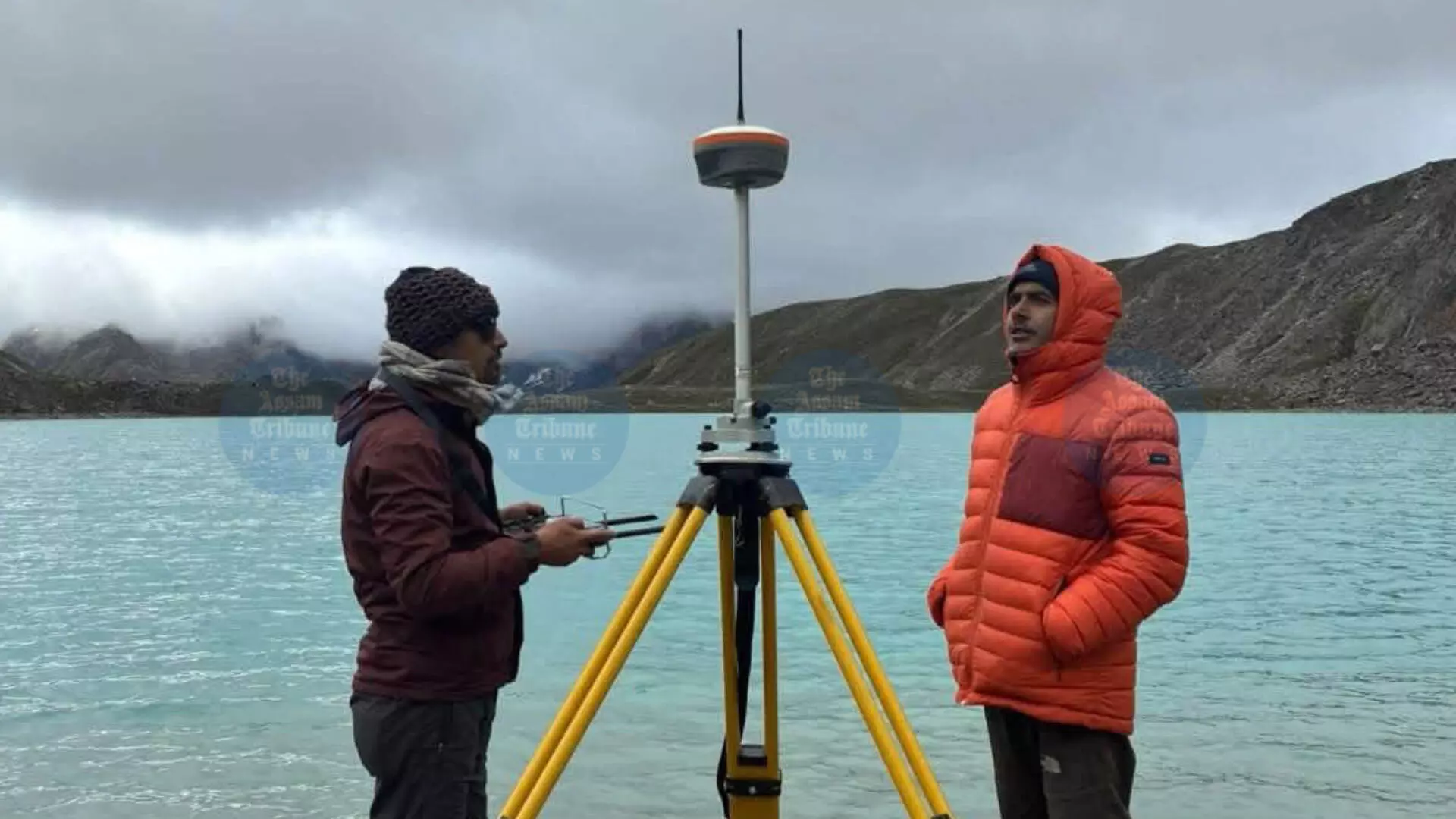
Bhubaneswar: Sikkim is intensifying its surveillance of 16 high-risk glacial lakes by deploying sensors, automated weather stations and early warning systems to detect changes in water levels and assess the risk of Glacial Lake Outburst Floods (GLOFs).
The measures have gained added significance following the recent glacier-related disaster in neighbouring Nepal, highlighting the risks posed by rapidly changing glacial environments in the Himalayan region.
Sikkim is home to more than 400 glacial lakes, of which 16 have been identified as highly vulnerable. Thirteen are located in North Sikkim and three in West Sikkim, with most of the monitoring infrastructure concentrated in North Sikkim.
The sensors continuously track changes in lake water levels and volume, while automated weather stations monitor weather conditions that could contribute to a sudden rise in water levels.
The state’s early warning systems are designed to alert authorities to sudden changes, allowing them to respond quickly and take necessary precautionary measures in vulnerable downstream areas.
Sikkim has been strengthening its glacial lake monitoring and early-warning network since the October 2023 South Lhonak Glacial Lake Outburst Flood, which triggered severe downstream flooding and caused extensive damage.
The enhanced monitoring system is aimed at improving preparedness and reducing the potential impact of future GLOF events on communities and infrastructure downstream.