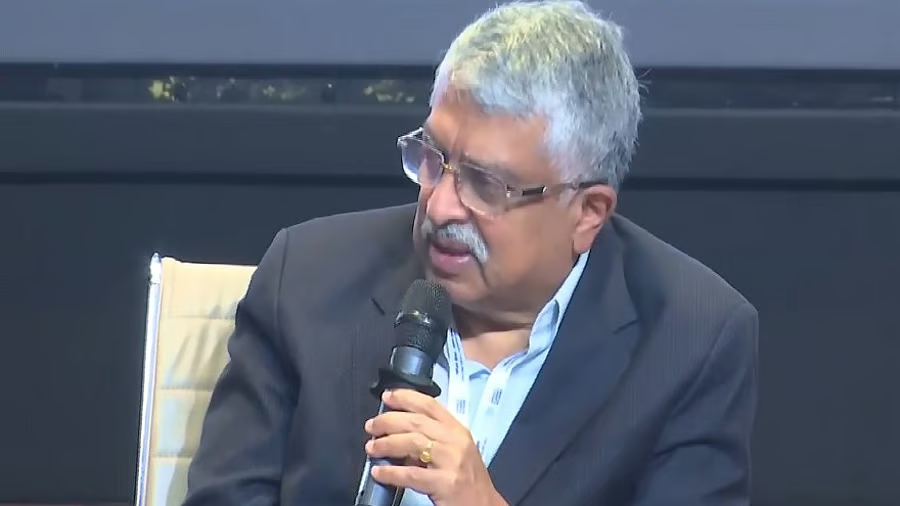
Bhubaneswar: Infosys co-founder Nandan Nilekani has proposed a series of systemic reforms to prevent question paper leaks in competitive examinations such as NEET, including the creation of a massive question bank and the expansion of computer-based testing facilities across the country.
Speaking on the NEET paper leak issue, Nilekani argued that relying on a single question paper creates financial incentives for individuals seeking to obtain and sell it before an examination.
“Why do we need to have something called ‘a’ question paper? Because the moment you have a question paper, then that creates an economic incentive for that to be sold,” he said.
As an alternative, Nilekani suggested developing a large repository of questions from which the paper for a particular examination could be generated at the last minute. He said this approach could reduce the incentive to leak a predetermined question paper.
He also called for a transition towards computer-based testing (CBT), supported by an expanded network of examination centres across the country.
Nilekani noted that India already has around 1.5 lakh locations where candidates can take tests, adding that the network needs to be expanded to improve access and support wider adoption of computer-based examinations.
He described question paper security and examination infrastructure as systemic issues that require comprehensive solutions rather than isolated interventions.
“These are all systemic issues which we will address in our committee,” he said, adding that Prime Minister Narendra Modi was keen to implement the committee’s decisions.
Focus on Examination Security
Nilekani’s proposals centre on reducing dependence on a single, pre-prepared question paper and strengthening the infrastructure used to conduct examinations.
A large question bank with last-minute paper generation could help limit the risks associated with advance access to examination papers. Meanwhile, computer-based testing could provide an alternative to conventional paper-based examinations, provided adequate infrastructure, cybersecurity safeguards and reliable systems are in place.
The proposals come amid continuing concerns over examination integrity and the need to ensure fairness for millions of students appearing for competitive entrance tests.
The recommendations, if adopted, would require detailed planning and implementation to ensure that examinations remain secure, accessible and transparent for candidates across India.
-OdishaAge