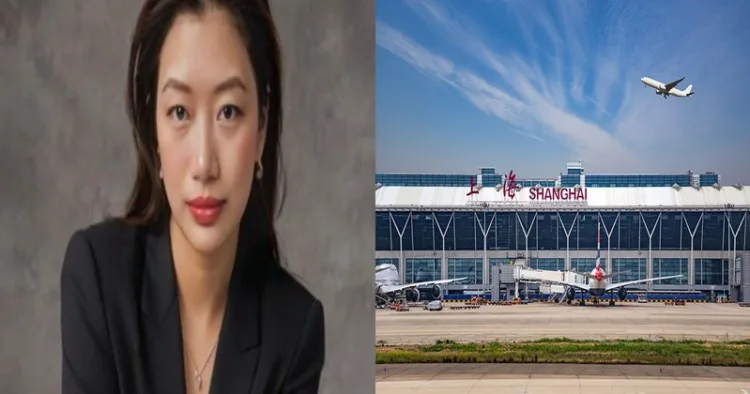
Bhubaneswar: In a fresh flashpoint between New Delhi and Beijing, an Indian citizen born in Arunachal Pradesh was detained, questioned and denied entry by Chinese immigration authorities at Shanghai Airport, reviving long-standing tensions over China’s territorial claims in India’s northeast.
Indian Traveller Held for 18 Hours After Transit Landing
Pema Thongdok, an Indian national originally from Arunachal Pradesh and currently working in the UK as a financial adviser, was en route from London to Japan with a transit stop in Shanghai on 21 November. At the e-gate, she was singled out by Chinese immigration officers, who reportedly refused to recognise her Indian passport because it listed “Arunachal Pradesh, India” as her place of birth.
What followed, according to Pema, was 18 hours of detention-like treatment:
-
Passport seized
-
No food provided
-
No access to the internet
-
No communication allowed with family
-
No explanation from authorities
She eventually managed to alert a friend in the UK, which helped trigger intervention from Indian officials. China has denied any wrongdoing, calling the accusations “false” and claiming “all procedures were followed.”
Beijing’s Longstanding Claim Over Arunachal Pradesh
China’s objection stems from its disputed claim over Arunachal Pradesh, which it refers to as “South Tibet.” Beijing’s stance draws ideological lineage from Mao Zedong’s “Five Finger Theory”, which described Tibet as China’s right palm and Ladakh, Nepal, Sikkim, Bhutan, and Arunachal Pradesh as the “five fingers” China must “liberate.”
This theoretical framework—historically expansionist, politically aggressive—continues to colour China’s posture toward India’s northeast.
India Rejects ‘Absurd’ Claim
New Delhi has consistently dismissed China’s narrative as baseless, expansionist and untenable, reiterating that Arunachal Pradesh is an integral and inseparable part of India—politically, constitutionally, and democratically.
Nearly 75% voter turnout from the state in India’s national elections underscores this democratic integration.
The Indian government has not yet issued a detailed public statement but has lodged a formal protest in both New Delhi and Beijing, condemning the treatment of an Indian citizen and objecting to China’s repeated challenges to India’s territorial sovereignty.
Pattern of Provocations
The incident comes on the heels of recurring Chinese attempts to provoke India:
-
issuing stapled visas or rejecting visas to Arunachal residents
-
renaming Indian villages
-
military incursions across the Line of Actual Control
-
aggressive diplomatic statements
By targeting an ordinary traveller, analysts argue China is once again attempting to internationalise and normalise its false territorial claims, while simultaneously needling India in the civilian domain.
Geopolitical Undercurrents
The episode reflects a deeper contest:
-
China’s strategic discomfort with India’s growing global stature, rising partnerships, and assertive foreign policy
-
Beijing’s attempt to maintain pressure points along the Himalayan frontier
-
A signalling strategy to project strength amid internal economic and political concerns
Human Impact Amid Diplomatic Chess
For Pema Thongdok, the ordeal was personal, frightening, and unexpected. For India, it is yet another reminder that China’s territorial claims are not confined to maps—they spill into borders, diplomacy, and even airport immigration queues.
As per government sources, India has made it clear that Arunachal Pradesh is India—legally, historically, culturally. Any challenge to this fact is unacceptable.
-OdishaAge