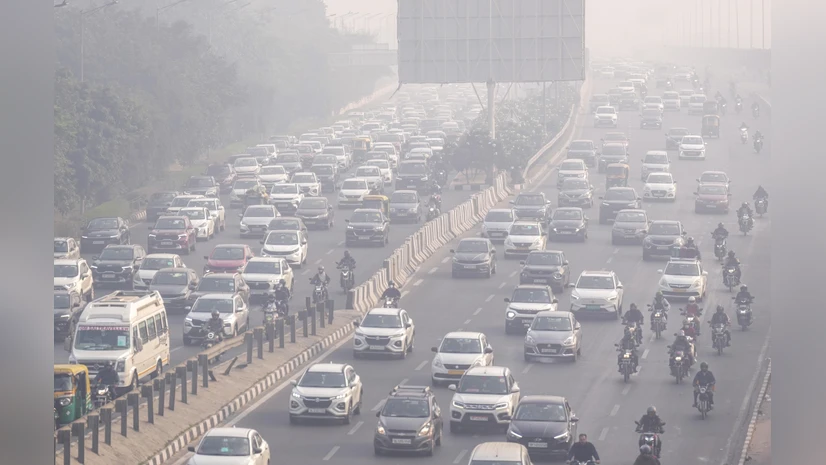
Bhubaneswar: Delhi woke up to another day of stifling air on Friday, with the capital’s overall Air Quality Index (AQI) climbing to 384 at 8:00 am, placing it firmly in the ‘very poor’ category, according to real-time data from the Central Pollution Control Board (CPCB).
Several regions slid back into the ‘severe’ zone, marking a sharp reversal after a brief improvement earlier this week. Mundka recorded the day’s worst air quality with an AQI of 436, followed closely by Rohini (432), Jahangirpuri (420) and Anand Vihar (408).
In total, 19 of Delhi’s 39 monitoring stations reported AQI levels above 400. Pollution hotspots such as Punjabi Bagh (417), RK Puram (418), Wazirpur (416) and Narela (407) continued to remain deeply polluted. Crowd-heavy areas including Chandni Chowk (408), Jawaharlal Nehru Stadium (401), and Burari Crossing (403) also slipped back into the ‘severe’ zone.
Vehicular Emissions Top Pollution Sources
Data from the Indian Institute of Tropical Meteorology’s Decision Support System showed that vehicular emissions remained the single largest contributor to Delhi’s pollution on Thursday at 19.5%.
Neighbouring cities also played a role:
-
Ghaziabad: 8.2% contribution
-
Baghpat: 7.3%
-
Stubble burning: 0.7%
Despite the ongoing harvest season, farm fires contributed minimally on Thursday, indicating that local sources within the NCR continue to drive pollution spikes.
Cold Wave Worsens Conditions
The cold wave sweeping across North India is deepening the crisis. Delhi-NCR and several cities in the northern plains recorded minimum temperatures between 8°C and 12°C, with fog and low wind speeds trapping pollutants close to the surface.
This combination of low temperatures, stagnant air, and high emission load is amplifying respiratory problems and pushing public health systems under pressure.
Schools Fully Reopen After GRAP-3 Withdrawal
Meanwhile, all schools in the capital have fully resumed physical classes from Thursday after the Commission for Air Quality Management (CAQM) lifted GRAP Stage-3 restrictions. The Directorate of Education has withdrawn its hybrid learning advisory, citing the temporary dip in pollution earlier in the week.
However, with the AQI surging again across multiple zones, education and health bodies are monitoring the situation closely.
Meteorologists warn that unless winds pick up, pollution levels may remain elevated over the next 48 hours. Authorities are expected to reassess GRAP restrictions if air quality continues to deteriorate.
-OdishaAge