Bhubaneswar: A recent Ground Penetrating Radar (GPR) survey has uncovered evidence suggesting the presence of a buried heritage city beneath Puri, one of India’s most sacred temple towns associated with Lord Jagannath.
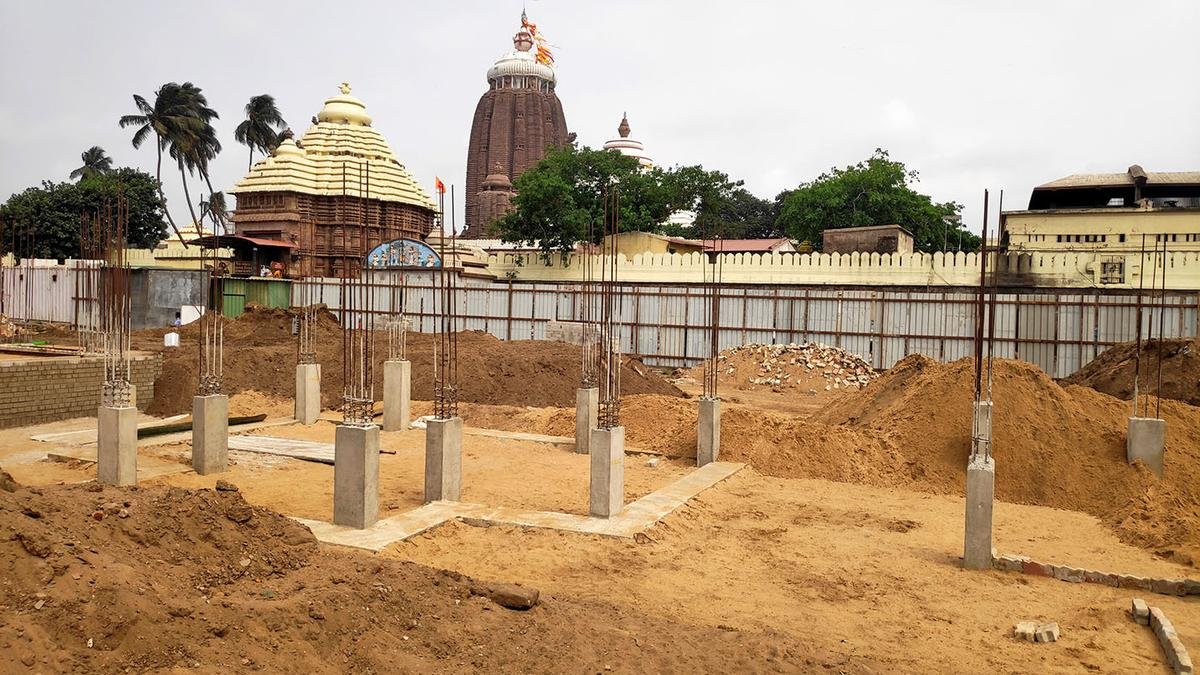
The findings emerged during excavation work linked to the Srimandir Parikrama Project around the iconic Jagannath Temple.
Ancient Remains Unearthed
Excavations near the temple complex have revealed structural remains believed to date back to the Ganga dynasty, indicating a rich historical layer beneath the present-day city.
Further GPR analysis has shown that these subsurface structures are not limited to the immediate temple surroundings but extend across large parts of Puri, pointing to the existence of an extensive and possibly well-planned ancient settlement.
Evidence of a Layered Past
According to the survey report, the soil of Srikhetra—the sacred region of Puri—contains multiple layers of historical remains, suggesting continuous habitation and development over centuries.
Experts believe this discovery could reshape understanding of Puri’s historical evolution, offering insights into urban planning, architecture and cultural life during earlier periods.
Scope for Further Exploration
Archaeologists and researchers are expected to conduct more detailed studies to:
-
Determine the exact age and extent of the structures
-
Understand their cultural and historical significance
-
Explore possibilities of conservation and documentation
The findings highlight Puri not only as a spiritual hub but also as a site of immense archaeological importance, with hidden layers of history yet to be fully uncovered.
-OdishaAge