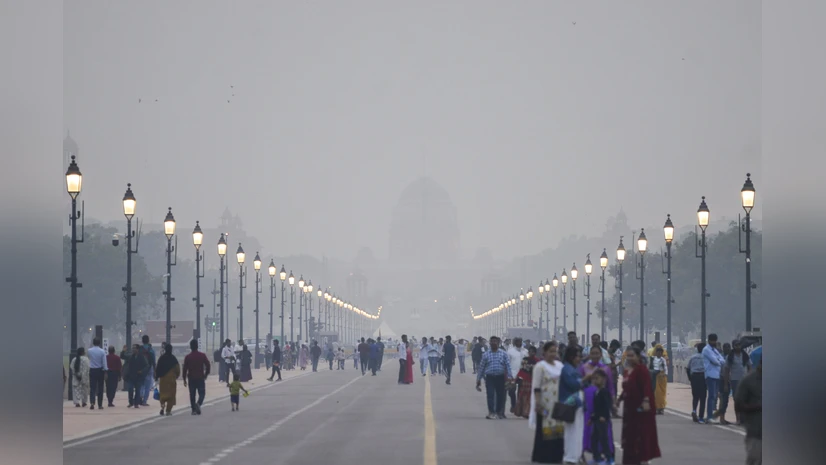
Bhubaneswar: Delhi’s air quality has once again plunged into the ‘severe’ category as thick smog blankets the national capital, marking the onset of yet another hazardous winter pollution spell. The dense fog and stagnant air have reduced visibility across major parts of the city, disrupting daily life and sparking renewed public health concerns.
According to data from the Central Pollution Control Board (CPCB), the city’s overall Air Quality Index (AQI) crossed 450 on Tuesday morning, with several monitoring stations recording even higher levels. Authorities have ordered school closures, while flights and trains faced delays due to poor visibility.
Environmental experts attribute the worsening pollution to a combination of factors — stubble burning in neighbouring states, vehicular emissions, construction dust, industrial smoke, and low wind speeds that prevent pollutant dispersion. The situation is further aggravated by Delhi’s geographical position, which traps pollutants during colder months.
Health officials have warned residents, particularly children and senior citizens, to limit outdoor exposure. Hospitals across the city have reported a rise in respiratory ailments, asthma, and eye irritation cases.
Meanwhile, the recurring pollution crisis has triggered a familiar round of political exchanges between Delhi and neighbouring state governments. While Delhi authorities blame stubble burning for the toxic haze, other states have cited the capital’s vehicular emissions as a major contributor.
With air purifiers, masks, and oxygen bars witnessing a sudden surge in demand, environmentalists are once again urging long-term policy interventions and regional cooperation to combat what has become an annual public health emergency in the capital.
-OdishaAge