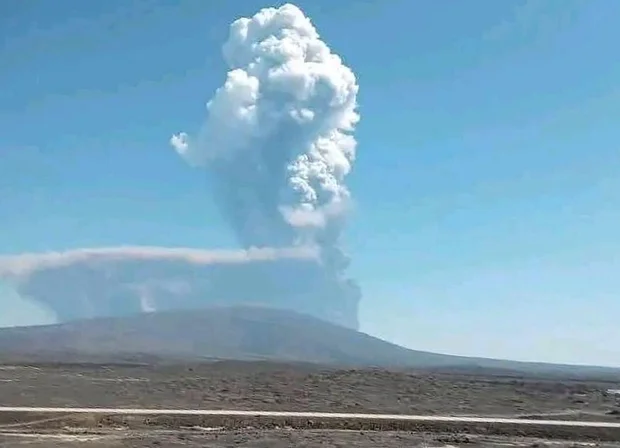
Bhubaneswar: Air travel across India and parts of West Asia faced major disruptions on Monday and Tuesday after a massive ash cloud from Ethiopia’s Hayli Gubbi volcano drifted across the Red Sea and entered the Indian airspace, particularly over the Himalayan region. The volcano—dormant for nearly 12,000 years—erupted suddenly, sending a towering plume of ash that travelled thousands of kilometres, impacting global aviation routes.
Airlines including IndiGo, SpiceJet, Air India, and Akasa Air announced widespread cancellations, diversions, and delays on both domestic and international routes as a precautionary measure.
DGCA Issues Detailed Safety Advisory
The Directorate General of Civil Aviation (DGCA) issued an urgent operational advisory to all airlines late Monday night, warning them to:
-
Avoid ash-affected routes and flight levels
-
Re-route aircraft and plan additional fuel
-
Conduct mandatory post-flight inspections for any possible ash exposure
-
Report engine anomalies immediately, including any suspected ash ingestion
-
Inspect runways and taxiways for ash accumulation
“Volcanic ash can severely damage aircraft engines, pit windshields, disrupt avionics, and degrade visibility,” the DGCA stated, urging airlines to exercise maximum caution.
Ash Plume Reached India, Now Drifting Towards China
Meteorological tracking confirmed that a dense ash layer entered northern India late Monday, affecting flight corridors used for long-haul traffic between Europe, the Middle East, and Southeast Asia. While the cloud caused aerial diversions, experts noted that the ash concentration remained higher at cruising altitudes rather than ground level, posing minimal direct risk to the public.
The ash plume is now moving eastward toward China and is expected to be completely clear of Indian airspace by 7:30 PM today, according to aviation weather agencies.
Global Impact
The eruption has triggered worldwide aviation alerts, with satellite images showing the ash cloud spreading rapidly across continents. The unprecedented nature of Hayli Gubbi’s awakening—after thousands of years of inactivity—has prompted scientists to study potential aftershocks and secondary eruptions.
Passengers Advised to Check Flight Status: Airlines have urged passengers to check updated schedules before heading to airports, as more adjustments are expected through the day.
-OdishaAge