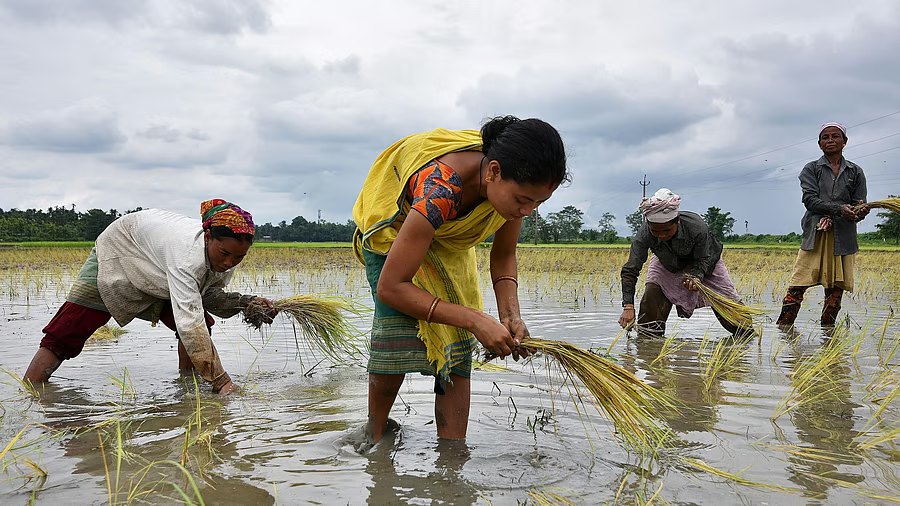
Bhubaneswar: India has emerged as the world’s largest rice producer, surpassing China and underscoring the scale, resilience, and diversity of its agrarian economy. With total rice production estimated at 1,245.04 lakh tonnes, the milestone reflects strong performance by several high-output states supported by favourable agro-climatic conditions and sustained policy backing.
Agriculture officials attribute India’s rise to a combination of ample monsoon rainfall, extensive river systems, and a well-developed canal and irrigation network that supports large-scale paddy cultivation. Rice, a water-intensive crop, continues to thrive in regions with assured water availability, making eastern, southern, and parts of northern India key contributors to national output.
A handful of states account for a significant share of total production, driven by improved seed varieties, wider irrigation coverage, and effective procurement mechanisms under the minimum support price (MSP) system. These factors have not only stabilised farmer incomes but also incentivised consistent acreage under paddy cultivation.
The achievement comes at a time when India plays a critical role in global food security, particularly in rice exports to Asia, Africa, and the Middle East. Despite periodic export restrictions aimed at protecting domestic supplies, India remains a pivotal player in the international rice market.
Experts note that while the production milestone is significant, future gains will depend on balancing output growth with sustainable water use, climate-resilient farming practices, and diversification in regions facing groundwater stress.
India’s position as the world’s top rice producer reinforces its status as an agricultural powerhouse, even as policymakers grapple with the twin challenges of sustainability and food security in a changing climate.
-OdishaAge