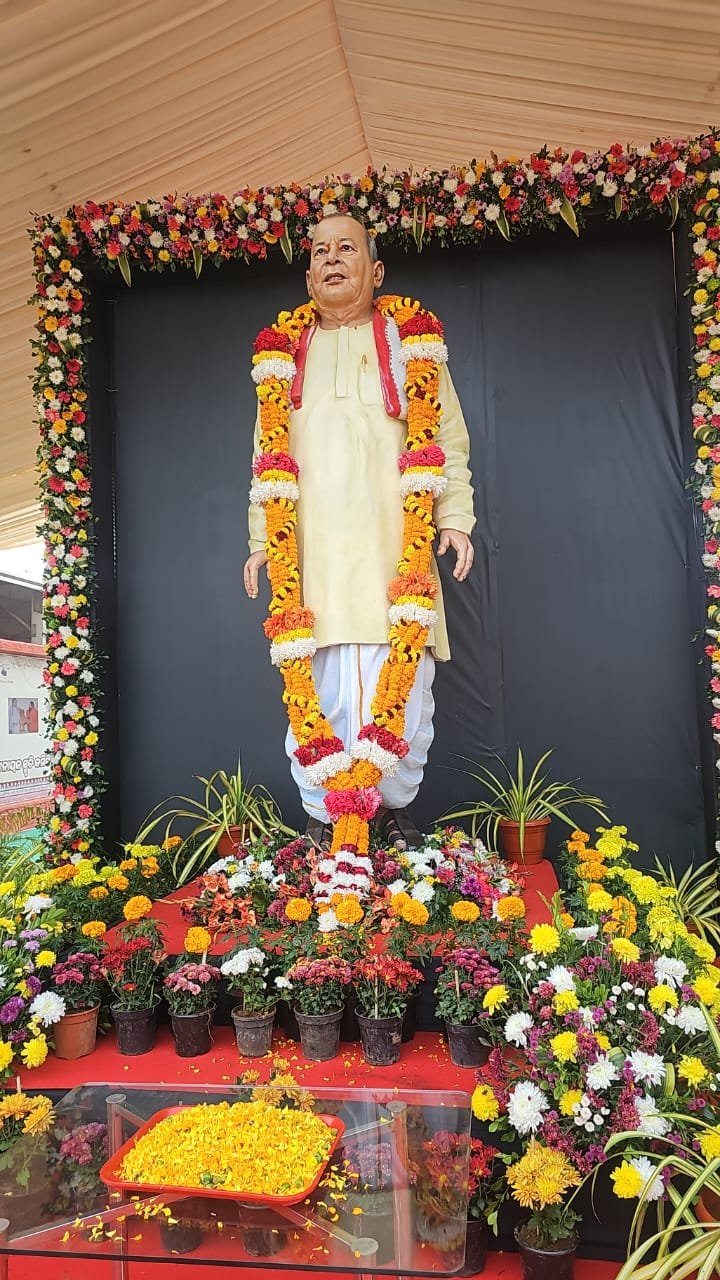
Bhubaneswar: Janaki Ballabh Patnaik occupies a distinctive and enduring place in the political history of Odisha. A mass leader, seasoned parliamentarian, and two-time Chief Minister, Patnaik was instrumental in shaping the state’s political discourse during the late twentieth century. His career reflected a blend of organisational strength, administrative resolve, and a progressive outlook that left a lasting imprint on Odisha’s governance and development trajectory.
Early Life and Entry into Politics
Born on January 3, 1927, Janaki Ballabh Patnaik was trained as a lawyer, a background that deeply influenced his political style—articulate, institution-oriented, and firmly grounded in constitutional values. He entered public life through the Indian National Congress and quickly rose through its ranks, gaining recognition for his debating skills, organisational abilities, and mass connect.
Before assuming executive office in the state, Patnaik served as a Member of Parliament in the Rajya Sabha, where he developed a reputation as a strong advocate for Odisha’s interests at the national level. His exposure to national politics helped him build networks within the Congress high command and sharpen his understanding of federal governance.
Chief Ministership: Two Defining Phases
Janaki Ballabh Patnaik served as Chief Minister of Odisha twice—first from 1980 to 1989, and later from 1995 to 1999. These two tenures came at different political moments, yet together they defined his legacy as a transformative leader.
First Tenure (1980–1989): Consolidation and Reform
Patnaik’s first term is often regarded as the most influential phase of his political career. Coming to power when Odisha faced economic constraints and administrative challenges, he focused on strengthening institutions and improving governance capacity.
One of his most notable achievements was pioneering women’s empowerment in local self-governance. Odisha became the first state in India to introduce 33 per cent reservation for women in Panchayati Raj Institutions, a reform that later became a national model. This decision significantly expanded women’s participation in grassroots democracy and reshaped rural political leadership in the state.
During this period, Patnaik also emphasised industrialisation, infrastructure development, and public sector expansion. He worked to improve Odisha’s investment climate while balancing social welfare priorities, particularly in education and rural development.
Second Tenure (1995–1999): Stability and Governance
Patnaik returned to power in the mid-1990s at a time of coalition politics and changing national equations. His second term focused on restoring administrative stability and continuing development initiatives amid fiscal pressures and political fragmentation.
This phase saw renewed emphasis on industrial growth, port development, and strengthening Odisha’s role in eastern India’s economic landscape. His government also paid attention to environmental and ecological concerns, including the protection of Chilika Lake, a vital natural and economic resource for the state.
Leadership Style and Political Influence
Janaki Ballabh Patnaik was known for his command over administration, strong oratory, and firm grip on party organisation. He was a leader who believed in decisive governance and was unafraid of taking politically challenging decisions when he felt they served long-term public interest.
Within the Congress party, he was regarded as a powerful state leader who could mobilise cadres, manage internal dissent, and deliver electoral results. His influence extended beyond Odisha, and he remained an important voice in national party forums for decades.
Contribution to Odisha’s Political Culture
Beyond policies and projects, Patnaik’s larger contribution lay in shaping Odisha’s modern political culture. He helped transition the state from personality-driven politics to a more institution-centred governance model. His stress on Panchayati Raj, administrative reforms, and inclusive development broadened the scope of political participation in Odisha.
He also mentored several leaders who later played significant roles in state politics, thereby ensuring continuity and depth in the political system.
Legacy
Janaki Ballabh Patnaik passed away on April 19, 2011, but his legacy continues to resonate in Odisha’s political and administrative frameworks. He is remembered as a reformist Chief Minister, a champion of decentralisation and women’s empowerment, and a leader who steered Odisha through critical phases of political and economic transition.
In Odisha’s contemporary political discourse, Patnaik is often cited as a benchmark for strong leadership, administrative clarity, and progressive thinking. His contributions remain integral to understanding the evolution of Odisha politics in the post-independence era.
-OdishaAge