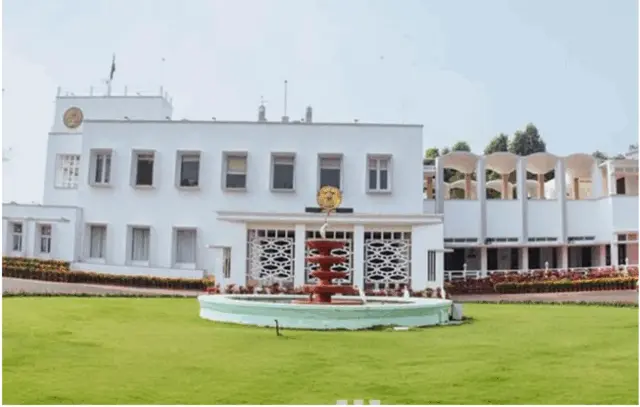
Bhubaneswar, India:
An analytical perspective on Bangladesh’s political turmoil and India’s looming strategic challenge
The dramatic sentencing of former Bangladesh Prime Minister Sheikh Hasina to death on 17 November has shaken South Asian politics and raised urgent questions about democracy, due process, and regional stability. Currently residing in India after fleeing her country earlier this year, Hasina — who ruled Bangladesh for 15 years — has become the most polarising political figure in the nation’s recent history. Her sentence, delivered under a regime critics describe as “undemocratic” and “militarised,” has triggered deep concern across diplomatic and human rights circles.
A Nation at a Democratic Crossroads
Bangladesh, once held up as a model of rapid economic progress under Hasina’s governance, is now facing allegations of political regression. Many observers argue that the current power structure resembles earlier phases of Pakistani military dominance — a comparison made more sensitive by Bangladesh’s painful history of liberation from Pakistan in 1971, a process during which India played a decisive role.
The new governing authority, formed after Sheikh Hasina fled to India amid widespread unrest, is accused by detractors of lacking democratic legitimacy. Passing a death sentence — the harshest possible verdict — against a former head of government in such an environment raises fundamental questions about judicial independence and political motivation.
From Economic Rise to Political Collapse
Despite controversies over authoritarianism, suppression of opposition, and allegations of rigged elections, Hasina’s tenure delivered measurable economic gains:
-
GDP growth averaging 5–6%
-
Sharp reductions in poverty
-
A stable manufacturing and export ecosystem, especially in textiles
This dual image — economic achievement on one side, accusations of democratic erosion on the other — defines Hasina’s complex legacy.
The chain of events that led to her downfall began with the 2024 student protests against a 30% reservation quota in government jobs. What began as a civil demonstration quickly spiralled into nationwide unrest. As clashes intensified and political pressure mounted, Hasina fled to India requesting protection, marking a dramatic turning point in the region’s political landscape.
The Death Sentence and Its Implications
Hasina was sentenced for allegedly orchestrating violence and ordering attacks on protesting students. Her supporters — both inside Bangladesh and abroad — argue that:
-
No fair trial is possible without a democratically elected government.
-
The verdict appears politically motivated.
-
It reflects a dangerous pattern of eliminating leaders through imprisonment or execution, echoing Pakistan’s history with figures like Zulfikar Ali Bhutto and, more recently, the prolonged incarceration of Imran Khan.
If a former prime minister can be condemned in this manner during a non-democratic phase, questions naturally arise about the legitimacy of the process.
India’s Diplomatic Dilemma
With Sheikh Hasina currently in India, New Delhi faces a complex geopolitical and ethical decision:
1. Extradition Pressure
Should Bangladesh request her handover, India must decide whether to return a former ally to a potentially hostile and unsafe environment — an act that may be perceived as complicity.
2. Strategic Calculations
Bangladesh is a key neighbour for India across several fronts:
-
Security along the long and sensitive border
-
Trade, especially textile and agricultural partnerships
-
Connectivity projects including ports, highways, and waterways
-
Counterbalance to China’s growing influence in South Asia
Any shift in Dhaka’s power structure could significantly alter these dynamics.
3. Domestic Political Impact
India, already surrounded by politically unstable neighbours — Pakistan on one side and now Bangladesh on the other — must consider the risk of regional volatility spilling across borders, from refugee influx to extremist mobilisation.
A Region at Risk
India now finds itself flanked by two nations experiencing deep political uncertainty. The weakening of democratic institutions in Bangladesh could signal a broader regional pattern of instability that threatens South Asia’s long-term security architecture.
The larger question remains: Can a death verdict issued under a non-elected government ever be viewed as legitimate? Critics argue that such actions undermine democratic norms and set dangerous precedents.
Conclusion: A Pivotal Moment for South Asia
Sheikh Hasina’s sentence represents more than a legal decision; it is a geopolitical flashpoint. As Bangladesh grapples with its political identity, India must navigate a diplomatic minefield where moral obligations intersect with national interests.
The coming weeks will likely determine:
-
Hasina’s fate
-
India–Bangladesh relations
-
The balance of power in South Asia
-
The future of democracy in a region where political transitions increasingly hinge on force, not votes
Whether this moment becomes a catalyst for democratic renewal or a slide into deeper authoritarianism remains to be seen — but its impact on the region is already profound.
-OdishaAge