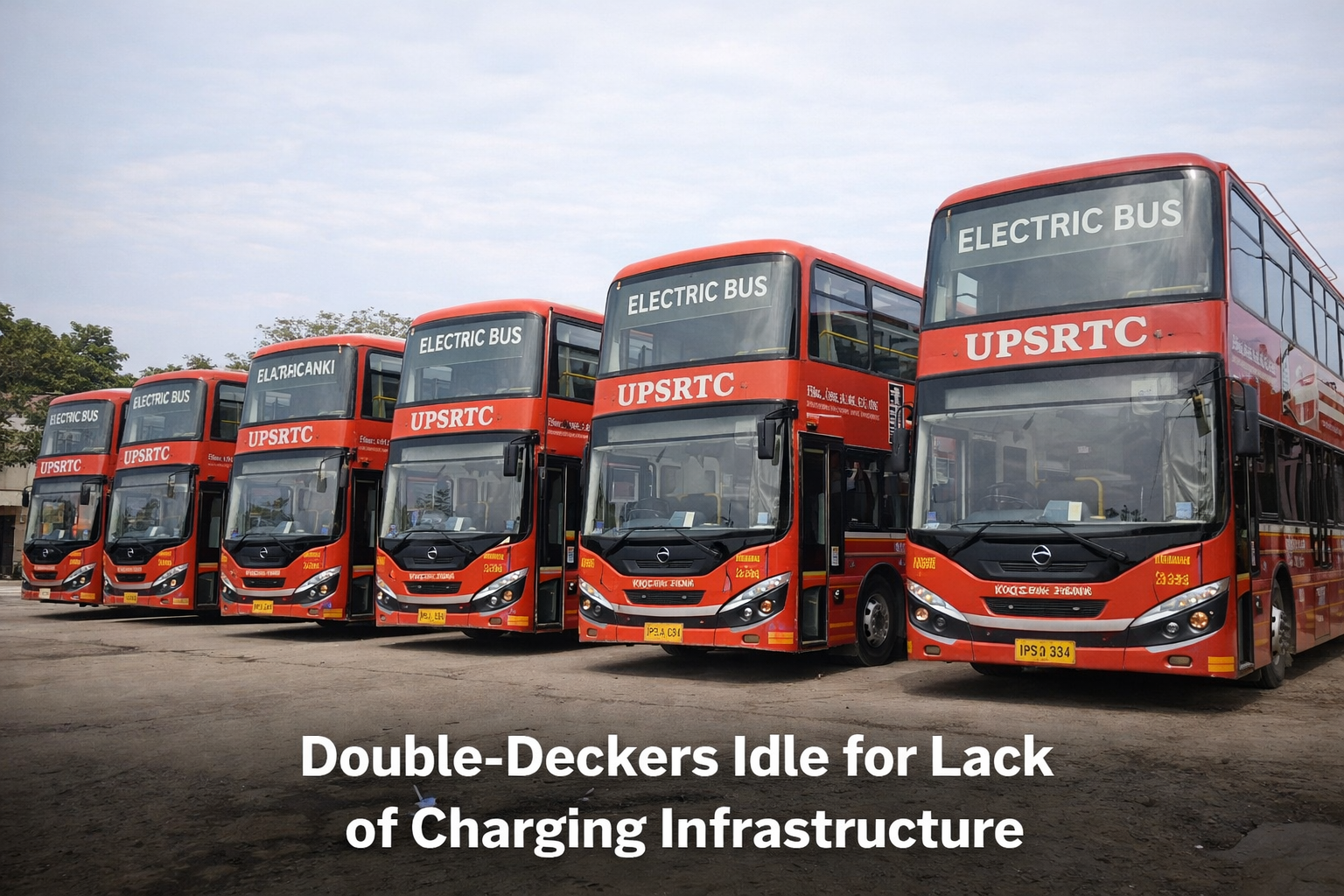
Bhubaneswar: In a surprising setback to Uttar Pradesh’s ambitious electric mobility plan, six out of eight newly launched AC double-decker electric buses remain unused at the Barabanki bus depot, months after being flagged off by Chief Minister Yogi Adityanath. The buses, procured at a cost of nearly ₹12 crore, were intended to enhance intercity connectivity, especially on the high-profile Lucknow–Ayodhya route. However, the project has stalled due to incomplete charging infrastructure and operational challenges.
Buses Ready, But Power Not
The buses were expected to run on intercity routes, providing comfortable and modern transport options for pilgrims and commuters. But only two of the eight buses are currently in operation. Officials revealed that the primary reason for the remaining six buses being idle is the lack of a dedicated charging facility.
A sum of ₹2.36 crore was transferred to the Uttar Pradesh Power Corporation Limited (UPPCL) in September 2025 for setting up a charging station. Yet, the electricity connection and charging equipment are still not operational, leaving the buses stranded at the depot.
“Despite being fully purchased and ready for deployment, the buses cannot run without proper charging facilities,” said a senior UPSRTC official. “We have existing charging stations, but they are already operating at full capacity. Occasional charging at other locations is not enough for these long-distance buses.”
Operational Issues Add to the Delay
In addition to infrastructure problems, UPSRTC officials have highlighted operational limitations that have affected the rollout. The buses’ average speed and limited range on intercity routes have been cited as issues, along with lower-than-expected passenger demand.
“Intercity routes require higher speeds and efficient turnaround times,” said another UPSRTC official. “The buses’ current speed and charging constraints make it difficult to operate them efficiently on long-distance routes.”
A tender for setting up a dedicated charging station is still under negotiation, but officials say the process is moving slowly. Meanwhile, the buses remain parked, contributing to a growing sense of concern among commuters and officials.
A Coordination Failure
The situation has raised serious questions about coordination between the transport department and the power department. While the buses were procured and launched with much fanfare, the necessary support infrastructure has not been developed in time.
“This is a clear example of poor planning and coordination,” said a transport analyst. “Electric mobility requires integrated planning involving both transport and power sectors. Without proper charging infrastructure, the entire project is incomplete.”
The delay has also raised concerns about the state’s electric mobility ambitions. Uttar Pradesh has been promoting electric vehicles as part of its clean energy and sustainability goals, but the current situation reflects the challenges of implementing large-scale electric bus projects.
Public Reaction and Future Steps
Commuters and local residents have expressed disappointment over the underutilisation of the buses, especially considering the high investment involved. Many have questioned whether the government will be able to deliver on its promise of modern electric transport.
Meanwhile, UPSRTC officials said they are working with UPPCL to fast-track the installation of a charging station. The tender process is expected to conclude soon, and the infrastructure is likely to be operational in the coming months.
“We hope the charging station will be ready soon,” said an official. “Once it is complete, all eight buses can be deployed on intercity routes, improving connectivity and offering better travel options.”
-OdishaAge