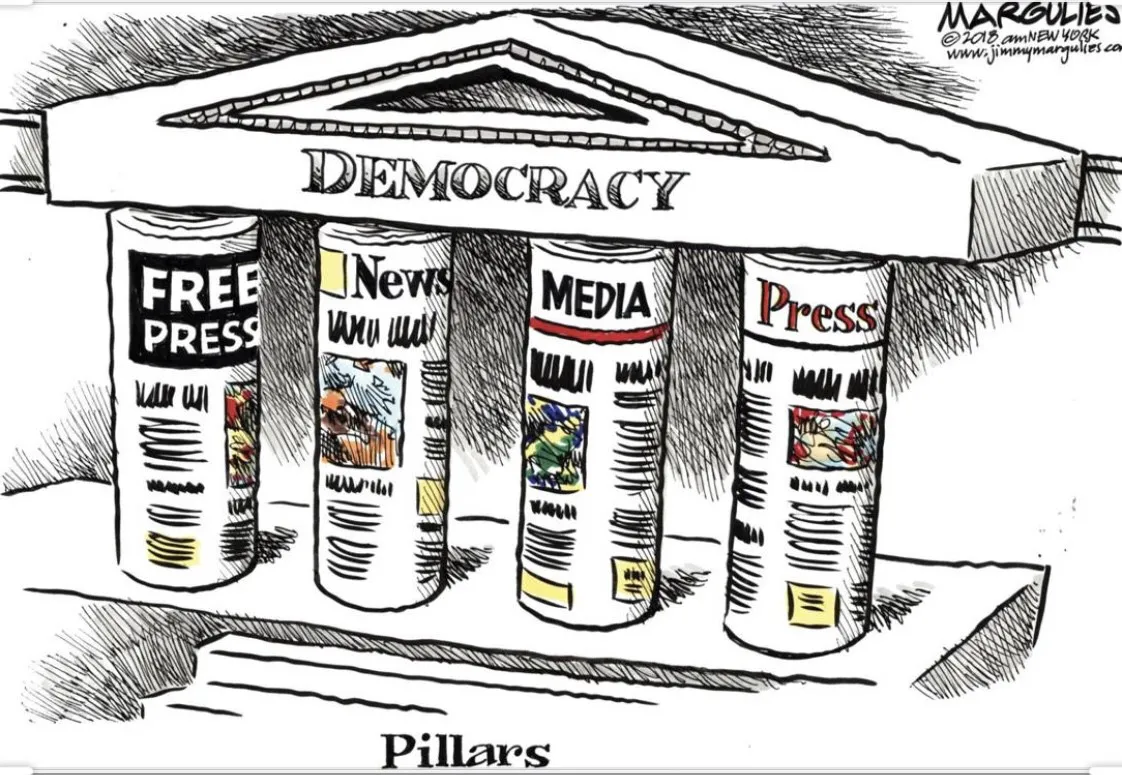
Bhubaneswar: Media is the fourth pillar of democracy. The primary responsibility of media is to identify and analyze the lacunas of the other three pillars, administrative, executive and judiciary. Journalism strengthens the society, creates public opinion and demands answers from the government. So the analytical capacity and power of the media is comparatively more. It is known as the most prominent medium for spreading awareness all across the globe amongst every sections of the society. The main responsibility of the media is to convey true information, make the people aware and bring the mistakes of the government to forefront. The areas like education, health, environment, human rights, society, trade, tourism and heritage are covered by the media and it does a great job by giving social messages. So with this respect and reverence given, all the journalists and the media house they represent gets uplifted. The neutrality and honesty of the journalists as well as the media houses would help them to garner respect and reputation. The media needs to be truthful, authentic and unbiased to achieve its stature.
The media had played a crucial part during the freedom movement and contributed immensely in ousting out the Britishers from India. The five objective policy of the media such as truthfulness, courage, humanity, social service and neutrality make the pillar even stronger. A journalist should be committed to the people and the job he/she is in. If the media loses its credibility then there is no value to its existence. The role of the media as well as the journalists are extremely important in the case of
changing governments, stopping riots, saving lives, helping in disaster management etc.
In this digital era, media has got a makeover in its profile. But the main motto if this medium and profession remains intact. The journalists get attacked by publishing truth. The profession of a journalist doesn’t get distracted by any circumstances. It is a profession that holds the sole goal of finding the truth and serving the nation. It is not an easy field. The tough circumstances a journalist has to face to gather information and show it to the world, nobody sees or talk about.
Special policies, planning and rules were set for the better performance of the press or media houses through the Press Commission report submitted to the government in 1954. In 1966, the government formed the Indian Press Council. As per the law, it was given special judiciary power. Any person can bring complaint against any newspaper or media house and journalists based on any traditional policy, respect and social inclination. Similarly, any media agency can complaint against the government and the other anti- social organisations to the Press Council of India. Many a times the Press Council starts the judicial process on it’s own without even any complaints from any media house if there is any compromise on the freedom and safety of journalism.
Post the digital movement in media the print media still carries its power. There are about 35,000 registered daily , weekly, and monthly newspapers, various news channels and a strong digital platform in India. Newspapers are published everyday, the number of pages in the newspapers have increased, colorful advertisements are decorated the sides of the prints because the electronics media telecast the
news in a quick and brief manner. At the same time the private news agencies are inclined to various government, political business so many a times it is not ideally possible to trust the news they telecast. These mediums are more sensationalized and operate like dramatized. People mostly get misinformed and deviated from the truth by this process. Today, the media needs to gain the trust of the people by
following an ethical path and publishing factual information rather than spreading misinformation.
-OdishaAge