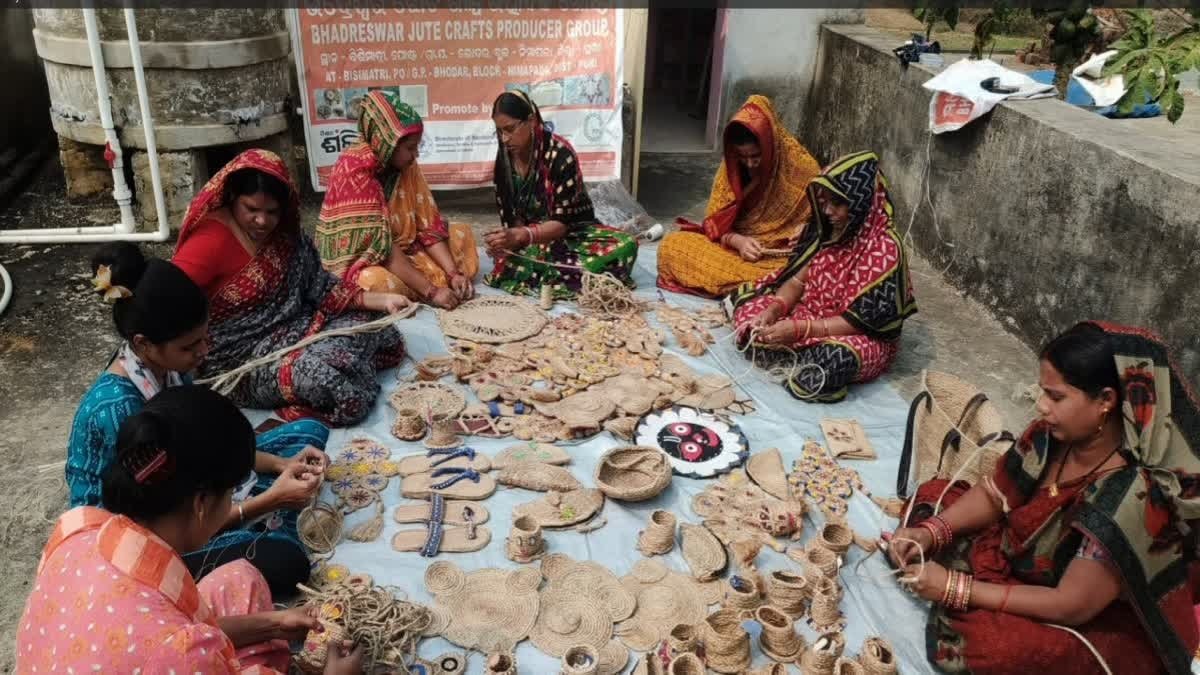
Bhubaneswar: In Bisimatri village of Odisha’s Puri district, a group of nearly 50 rural women has transformed eco-friendly craftsmanship into a sustainable livelihood, building a successful jute-based enterprise that has brought financial independence and social empowerment to their community.
The initiative began in 2015, when artisan mentor Amiya Poddar introduced local women—many of whom were engaged solely in household work—to the art of jute handicrafts. Starting with a few basic sewing machines, the women learned to produce jute bags, folders, slippers, footwear, pen stands, and home décor items, gradually turning a skill-building effort into a viable business.
Over the years, the collective enhanced its technical skills and upgraded equipment, sourcing raw jute materials from Kolkata and expanding its market reach to across Odisha, Hyderabad, and Kolkata. Their products, particularly jute folders, have found widespread institutional use at conferences, cultural programmes, and official events. Some of their handcrafted items have even been presented to the President of India, marking a significant milestone for the group.
Today, the enterprise generates a monthly income ranging from ₹50,000 to ₹2 lakh, with an annual turnover close to ₹15 lakh, providing stable earnings to its members and reducing dependence on seasonal or informal work.
The group has received support from the Handicrafts Department and the Odisha Livelihoods Mission, which have facilitated training, exposure, and market linkages. With demand steadily increasing, the women are now seeking a permanent workspace to scale up production and improve efficiency.
Officials and development practitioners say the Bisimatri model highlights how eco-friendly industries, skill development, and institutional support can converge to empower rural women, promote sustainable livelihoods, and strengthen the local economy.
-OdishaAge