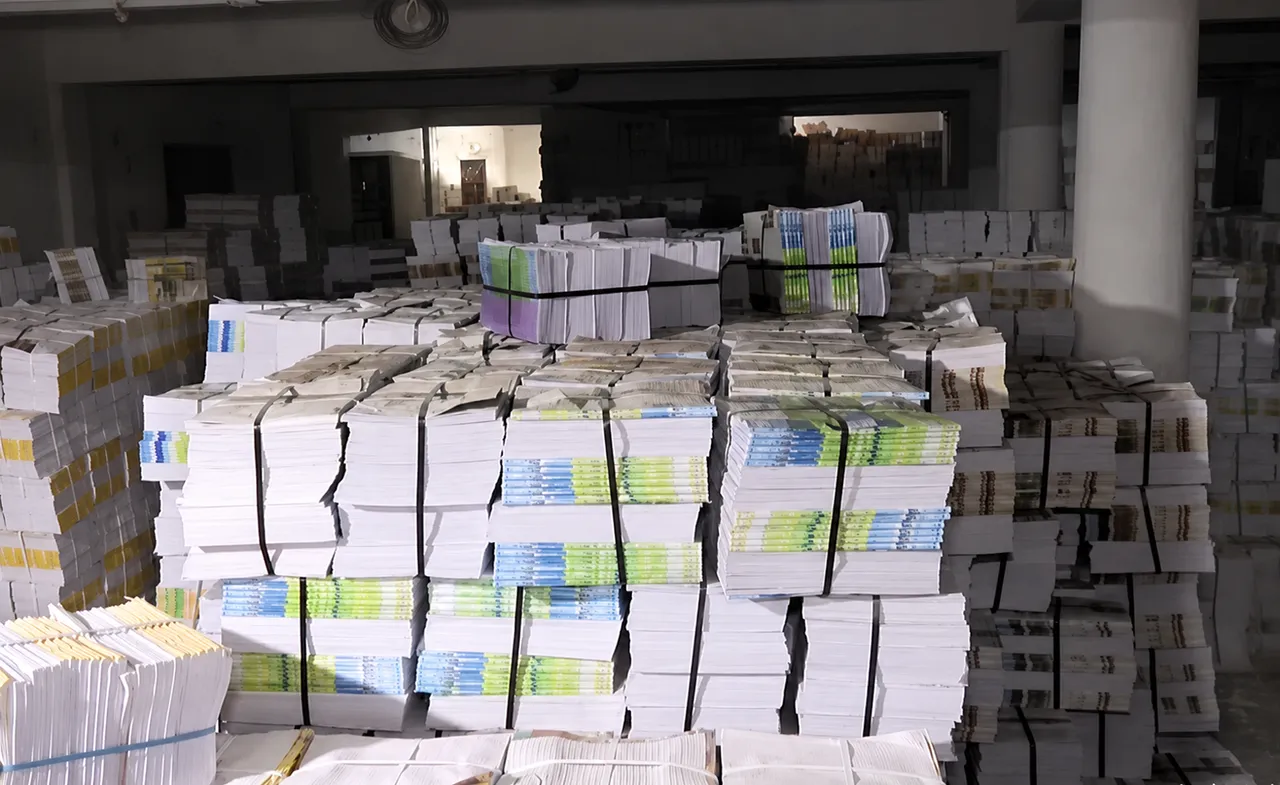
Bhubaneswar: The Odisha government has clarified that it spent approximately Rs 21 crore on outsourcing the printing of newly revised textbooks for Classes I to VIII to private printing presses, amid growing controversy over numerous factual, grammatical and typographical errors found in the books.
The clarification was issued by the Directorate of Textbook Production and Marketing (TBP&M) following allegations that the state had incurred an expenditure of Rs 165 crore for textbook printing. Officials stated that the reported figure was incorrect and that the actual cost of outsourcing the printing work was around Rs 21 crore.
According to TBP&M, the decision to engage private printing presses was necessitated by inadequate in-house printing capacity and the need to ensure the timely production and distribution of textbooks to students across the state.
The issue has attracted significant public attention after teachers, parents and educationists identified a large number of errors in the revised textbooks. The mistakes reportedly include factual inaccuracies, grammatical mistakes, spelling errors and typographical issues across multiple subjects and grade levels.
The controversy has raised concerns about the quality control mechanisms involved in the preparation, editing and publication of educational materials intended for schoolchildren.
Taking serious note of the matter, Odisha Chief Minister Mohan Charan Majhi has ordered the formation of a three-member committee to conduct a detailed inquiry into the issue. The committee has been tasked with identifying the source of the errors, examining the textbook review and approval process, and fixing responsibility for lapses that may have occurred during content preparation and publication.
Officials said the panel will also recommend corrective measures to prevent similar incidents in the future and ensure that students receive accurate and error-free learning materials.
The state government has assured that necessary corrections will be made and that accountability will be established based on the findings of the investigation.
The episode has sparked a broader discussion on textbook quality, editorial oversight and the importance of rigorous review mechanisms in educational publishing, particularly when revised curricula are introduced on a large scale.
As the inquiry proceeds, stakeholders in the education sector are awaiting the committee’s findings and recommendations, which are expected to guide future reforms in textbook development and publication processes in Odisha.