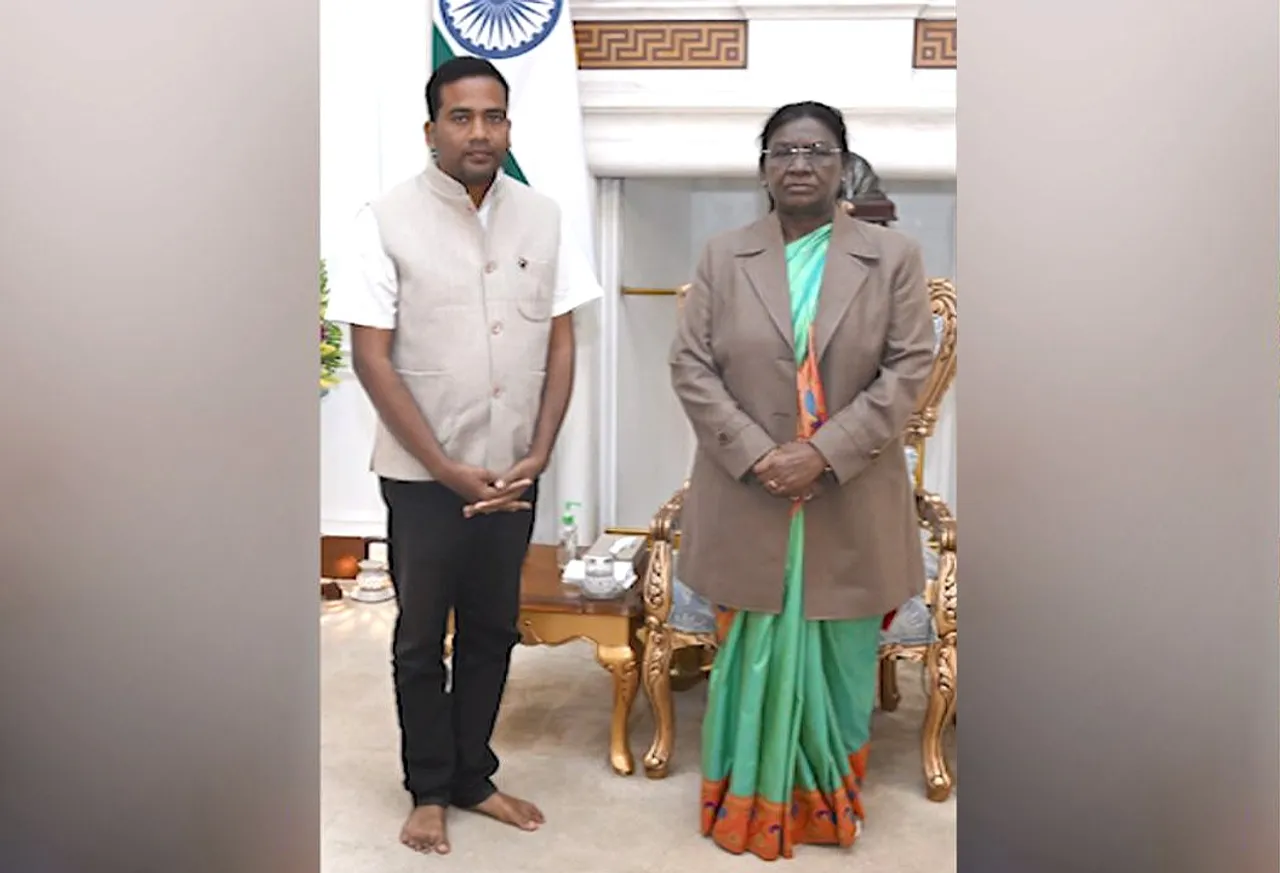
Bhubaneswar: The national recognition accorded to Odia sculptor Upendra Nath Giri for the Vishwarupa statue at Lok Bhavan underscores a broader shift in how regional and traditional artists are being acknowledged within India’s public and institutional spaces. Presidential appreciation and felicitation at Rashtrapati Bhavan elevate the achievement beyond personal acclaim, placing it within the narrative of cultural preservation and state-supported art.
Public installations like the Vishwarupa statue serve a dual purpose. Artistically, they reaffirm India’s civilisational motifs and spiritual symbolism in contemporary governance spaces. Institutionally, they signal an effort to integrate indigenous craftsmanship into modern state architecture, countering the long-standing dominance of outsourced or anonymised public art.
Giri’s journey—from Balasore to national recognition—also reflects the untapped potential of traditional sculpture as a viable profession, particularly in states like Odisha with deep sculptural heritage rooted in temple architecture and stone carving traditions. His call for youth participation addresses a critical policy challenge: sustaining artisanal skills amid declining intergenerational transmission and limited economic incentives.
At a broader level, such recognition aligns with cultural economy objectives, where heritage-based skills are increasingly viewed as contributors to soft power, tourism, and creative industries. However, isolated honors must be supported by systemic measures—training institutions, market access, and public commissions—to translate symbolic appreciation into sustainable livelihoods for artisans.
In essence, Upendra Giri’s recognition is not merely an individual milestone; it reflects a gradual recalibration of India’s cultural policy framework toward celebrating regional talent and embedding traditional art forms into the nation’s contemporary identity.
-OdishaAge