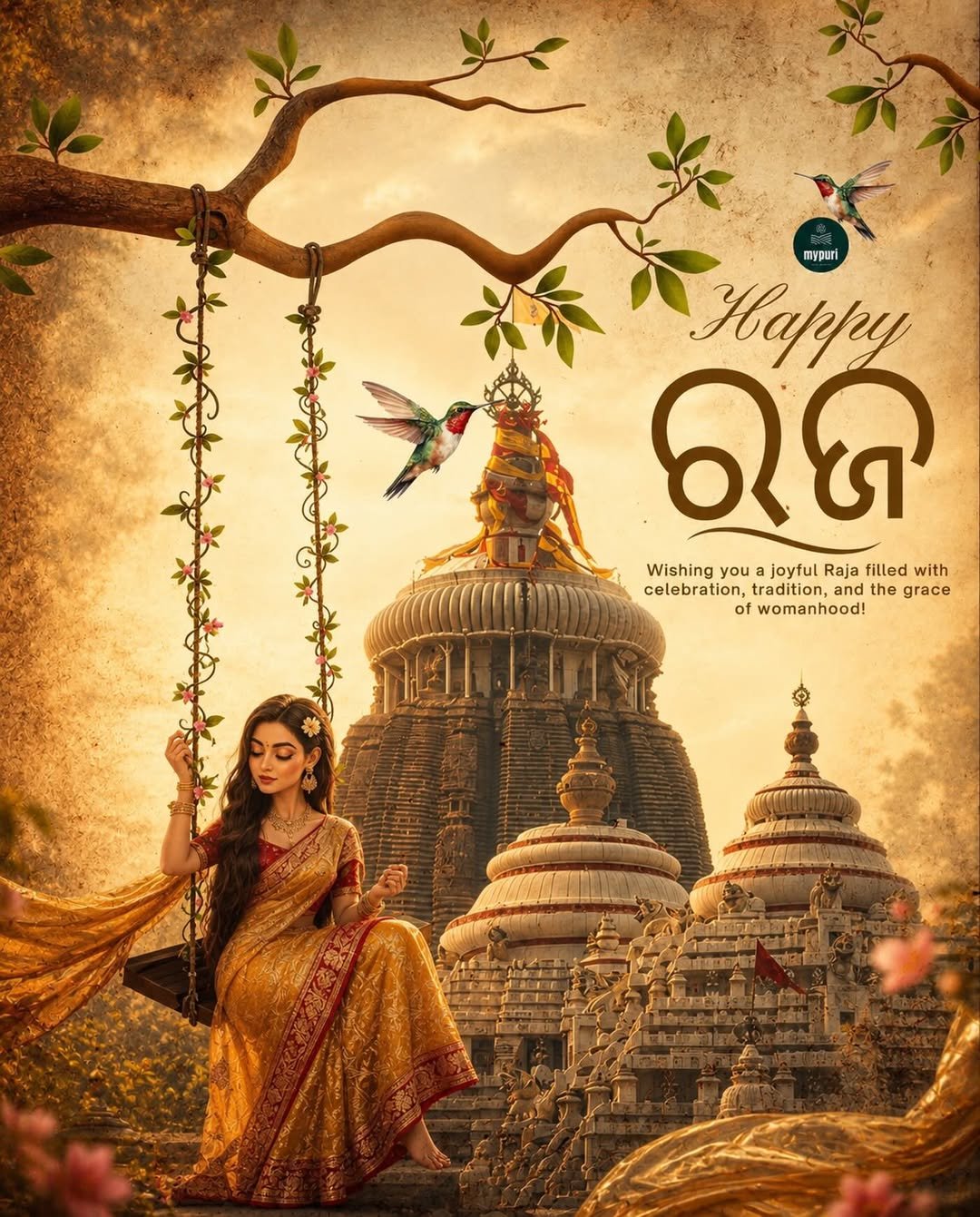
Bhubaneswar: Raja is much more than a festival. It is a profound cultural tradition that carries a message society still struggles to embrace openly—that menstruation is natural, periods are not a taboo, and the power to create life deserves respect rather than stigma.
Long before conversations about menstrual health, gender equality and bodily autonomy entered mainstream discourse, Raja celebrated these ideas through a unique and powerful symbolism. The festival is rooted in the belief that Mother Earth undergoes her annual menstrual cycle during this period and therefore deserves rest and rejuvenation. As a mark of respect, agricultural activities are paused, the soil is left undisturbed and nature is allowed to renew itself.
This tradition reflects a remarkable understanding of the relationship between fertility, creation and rest. Rather than viewing menstruation as something impure or shameful, Raja recognizes it as a natural process linked to life, growth and renewal. In doing so, it offers a perspective that remains relevant even today.
Perhaps the most meaningful lesson Raja teaches is the value of rest. In a world that often glorifies constant productivity, the festival reminds us that rest is not a sign of weakness but a necessity. Renewal is essential for both people and nature. Just as the Earth is honoured during Raja, every individual deserves dignity, care and respect.
The festival also serves as a powerful reminder that menstruation should never be hidden behind silence, embarrassment or discrimination. It is a natural biological process experienced by millions and an integral part of human life. By celebrating the menstrual cycle of Mother Earth, Raja challenges social stigmas and encourages a more respectful and inclusive understanding of womanhood.
At its heart, Raja is a celebration of life itself—of fertility, renewal, resilience and the nurturing power of nature. It teaches that dignity is deserved, respect is non-negotiable and that the processes that sustain life should be acknowledged with pride rather than whispered about in shame.
More than a cultural festival, Raja stands as a timeless symbol of womanhood, renewal and respect—a tradition whose message continues to resonate across generations.
-OdishaAge